
Filsafat Pendidikan Islam Dalam Perspektif Muhammad Abduh
Keywords:
The concept of Islamic educational philosophy, Theological Rationalism, Muhammad AbduhAbstract
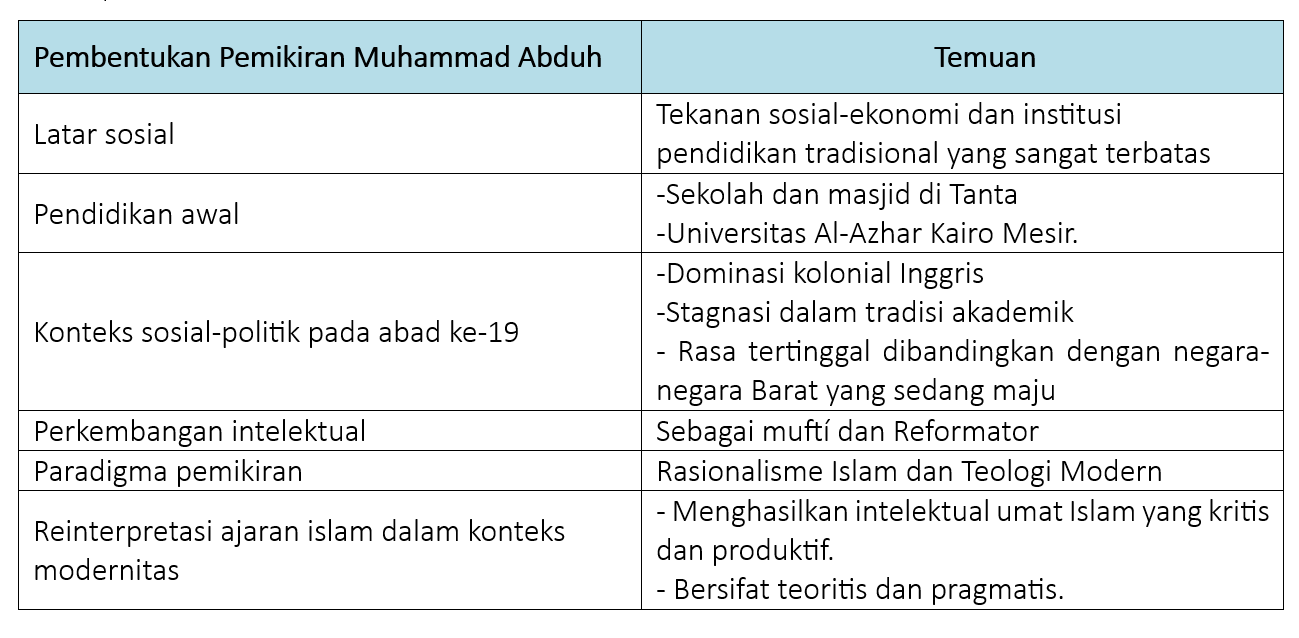
This study aims to examine the philosophy of Islamic education from the perspective of Muhammad Abduh, with a particular emphasis on how the concepts of Islamic modernism and rationalism that he advocated shaped a new paradigm for modern Islamic education. A qualitative–descriptive method was used in this research. Abduh’s major works such as Risālat al-Tawḥīd and Tafsīr al-Manār along with several of his reformist writings and commentaries, were analyzed philosophically and historically through hermeneutics and content analysis. The findings indicate that Abduh’s thought on Islamic education highlights the integration of revelation and reason, faith and knowledge, as well as religious education and modern science. His ideas were intended to cultivate individuals who are rational, ethical, and socially productive. He criticized conventional educational methods that emphasized rote memorization without understanding, and instead promoted an approach centered on ijtihād, discussion, and the contextualization of Qur'anic values as the foundation of education. The contribution of this study lies in offering a new interpretation of Abduh’s educational ideas. This interpretation concerns how Abduh’s principles of theological rationalism can be applied to develop an integrative and humanistic curriculum grounded in Islamic social ethics and maqāṣid al-sharī‘ah in the modern era.
Downloads
Downloads
Published
Issue
Section
License
Copyright (c) 2025 Dewi Tsamrotul Aisalmiyah, Faisal Akbar, Fauzyatuz Zakyah, Habibatul Maula, Habibullah, Kistina Aymuni (Author)

This work is licensed under a Creative Commons Attribution 4.0 International License.
This journal provides immediate open access to its content under the Creative Commons Attribution 4.0 International License (CC BY 4.0). This license permits unrestricted use, distribution, and reproduction in any medium, provided the original work is properly cited.