
Filsafat Pendidikan Islam Dalam Perspektif Ibnu Maskawayh
Keywords:
Ibn Maskawayh, Islamic Educational Philosophy, Educational ChallengesAbstract
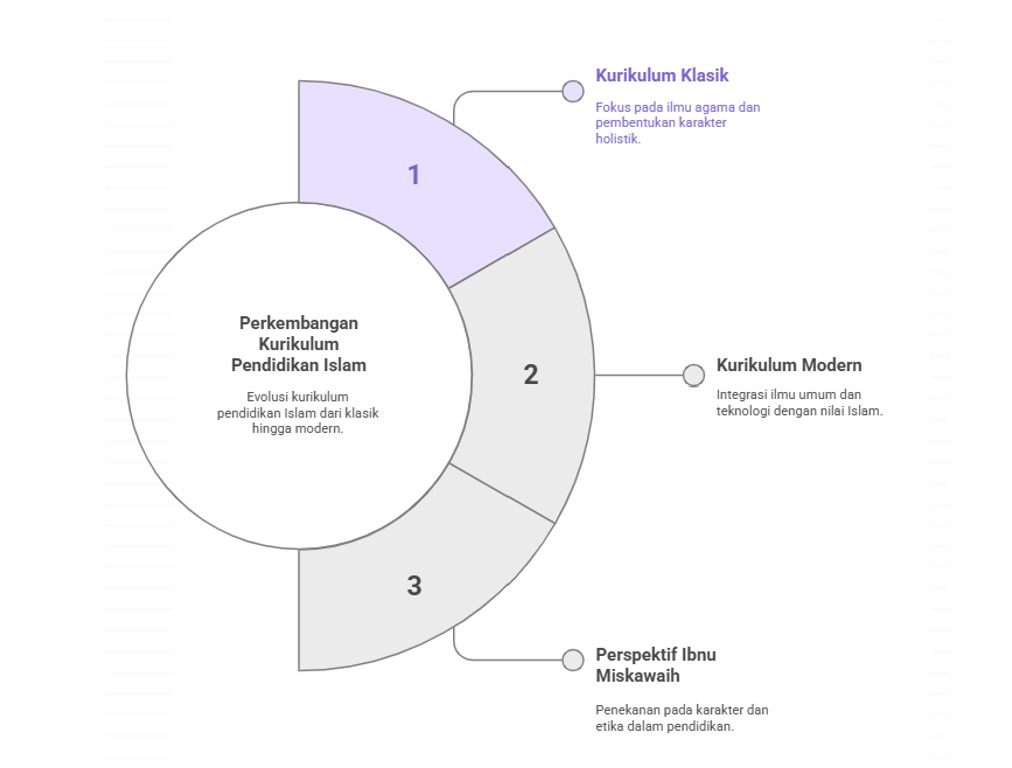
This study examines the Islamic educational thought of Ibn Miskawayh, focusing on the formation of noble character as the core of educational objectives, which aims to achieve true happiness (al-sa‘ādah) through the development of an inner disposition that naturally produces good actions. Ibn Miskawayh’s holistic approach emphasizes the balance between physical, intellectual, and spiritual aspects, integrating both religious and worldly sciences into a curriculum that addresses all dimensions of the human being. Effective education, according to him, requires natural methods that align with the developmental stages of learners, with teachers serving as moral and spiritual guides. This research employs a qualitative method using literature review and descriptive-critical analysis to present a conceptual framework and practical recommendations for the development of modern Islamic education. Furthermore, the study discusses the relevance of classical and modern curricula in addressing contemporary educational challenges, which demand the integration of scientific knowledge and character development to shape a balanced and competent generation in the global context. The findings reinforce the importance of Islamic education rooted in moral and spiritual values while accommodating modern advancements, in order to cultivate insān kāmil individuals who are faithful, morally upright, and globally competitive.
Downloads
Downloads
Published
Issue
Section
License
Copyright (c) 2025 Agil, Dimas Agussolihuddin, Dina Islamiyah, Firdatuus Sholiha, Adit Firmmansyah (Author)

This work is licensed under a Creative Commons Attribution 4.0 International License.
This journal provides immediate open access to its content under the Creative Commons Attribution 4.0 International License (CC BY 4.0). This license permits unrestricted use, distribution, and reproduction in any medium, provided the original work is properly cited.