Hakikat Pendidik Dalam Tinjauan Filsafat Pendidikan Islam
Keywords:
Educator, Islamic Educational Philosophy, Human NatureAbstract
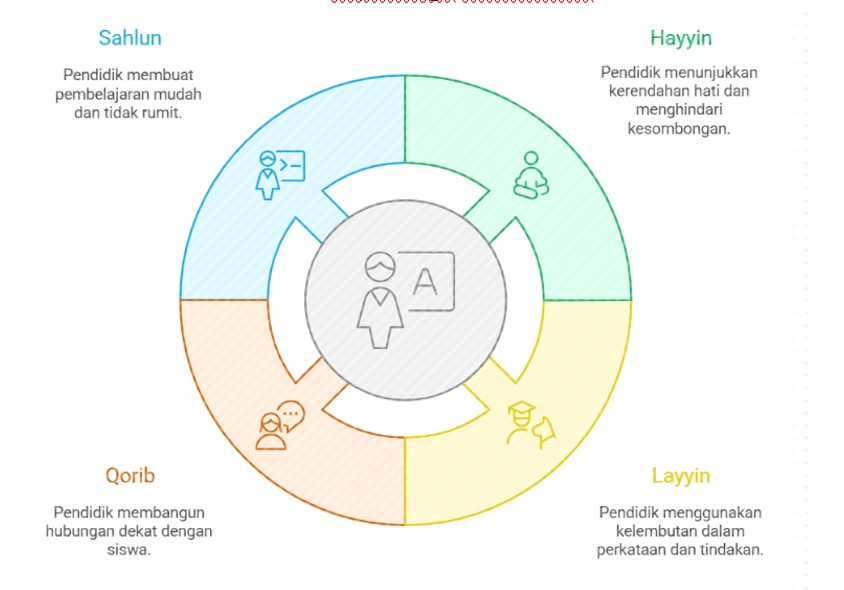
The discourse on the essence of educators in Islamic educational philosophy is essential, as educators function not only as instructors but also as learners who continuously develop their intellectual and moral capacities. This study aims to explain the concept of humans as the primary actors in education, identify the ideal typology of educators from an Islamic perspective, and examine the moral, spiritual, and professional responsibilities inherent to the teaching profession. Employing a qualitative method, this research utilizes a literature review that draws on primary and secondary sources, including the Qur’an, Hadith, classical scholarly works, contemporary literature, and academic publications related to Islamic educational philosophy. The findings indicate that humans hold dual roles as educators and learners, both of which interact to create a dynamic, humanistic, and transformative educational process. The ideal educator is characterized by humility, gentleness, exemplary conduct, and the ability to facilitate effective learning. Moreover, educators bear the responsibility of strengthening moral integrity and continuously improving professional competence. These findings highlight the pivotal role of educators as the foundational agents in shaping morally upright and excellent generations in accordance with Islamic values
Downloads
Downloads
Published
Issue
Section
License
Copyright (c) 2025 Adelia, Hasina Sabilah, Hikmatul Musayyaroh, Duwi Harisatul Mu'awenah, Abdur Rahman Vicky, Ahmad Zulkifli Abdallah (Author)

This work is licensed under a Creative Commons Attribution 4.0 International License.
This journal provides immediate open access to its content under the Creative Commons Attribution 4.0 International License (CC BY 4.0). This license permits unrestricted use, distribution, and reproduction in any medium, provided the original work is properly cited.