Analisis Kebutuhan dalam Perancangan Pembelajaran PAI bagi Generasi Z di Era Digital
Keywords:
Islamic Religious Education, Generation Z, Learning Design, Digital EraAbstract
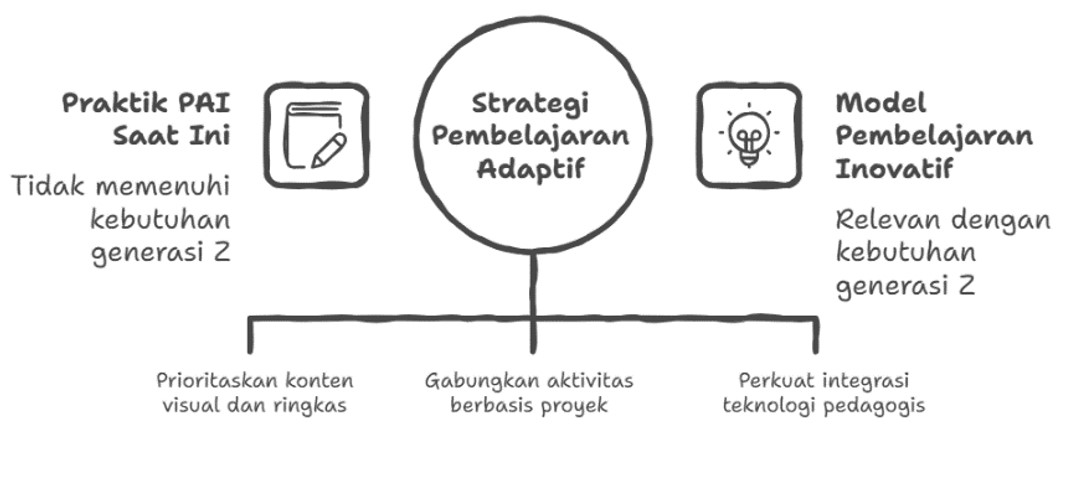
This study aims to analyze the needs in designing Islamic Religious Education (PAI) learning that aligns with the characteristics of Generation Z, a cohort that has grown up in a highly digital environment. Generation Z tends to demonstrate fast-paced, visual, interactive learning preferences and relies heavily on technology as part of their daily activities. This research employs a descriptive qualitative approach through a literature review and secondary data analysis drawn from journals, books, and recent studies related to PAI learning and the learning profiles of Generation Z. The findings indicate that PAI learning requires an innovative design that integrates digital media, collaborative approaches, and contextual learning methods connecting Islamic values with students’ real-life experiences. The needs analysis further highlights the importance of enhancing teachers’ digital literacy, adapting the curriculum to contemporary issues, and implementing learning models such as blended learning and project-based learning to increase student engagement and comprehension. Overall, the study affirms that needs analysis is a strategic step in developing PAI learning designs that are more adaptive, effective, and relevant to the dynamics of the digital generation.
Downloads
Downloads
Published
Issue
Section
License
Copyright (c) 2025 Fardila Silvia, Ainur Rofiq Sofa (Author)

This work is licensed under a Creative Commons Attribution 4.0 International License.
This journal provides immediate open access to its content under the Creative Commons Attribution 4.0 International License (CC BY 4.0). This license permits unrestricted use, distribution, and reproduction in any medium, provided the original work is properly cited.