Strategi Pengelolaan Kelas dalam Pembelajaran Pendidikan Agama Islam: Sintesis Hasil Kajian Pustaka
DOI:
https://doi.org/10.65941/0eyzfe06Keywords:
Classroom management, Islamic Religious Education, ; learning effectiveness, library researchAbstract
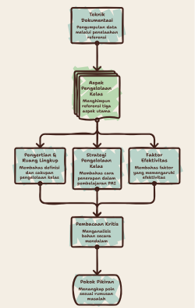
Classroom management is a crucial factor in determining the effectiveness of Islamic Religious Education (IRE) learning. The diversity of students' characteristics, low learning motivation, and dynamic classroom interactions require teachers to implement adaptive and systematic classroom management strategies. This study aims to synthesize findings from the existing literature on classroom management strategies in Islamic Religious Education and to identify the factors influencing their effectiveness. The study employed a qualitative approach using a library research method. Data were collected from relevant books, scholarly journal articles, and other academic publications on classroom management and Islamic Religious Education, and were analyzed through descriptive content analysis. The findings reveal four primary strategies for effective classroom management: creating a conducive learning environment, implementing varied instructional methods, providing motivation and positive reinforcement to students, and consistently enforcing classroom rules. The effectiveness of these strategies is influenced by teachers' pedagogical competence, students' characteristics, and supportive learning environments. This synthesis highlights that classroom management extends beyond maintaining classroom order; it serves as a pedagogical strategy for improving the quality of the learning process and achieving the instructional objectives of Islamic Religious Education.
Downloads
Downloads
Published
Issue
Section
License
Copyright (c) 2026 Moh.Ammar Abdillah, Nisa Maghfirah Maulidia, Nurul Julia Badri, Moh. Zainul Rizal (Author)

This work is licensed under a Creative Commons Attribution 4.0 International License.
This journal provides immediate open access to its content under the Creative Commons Attribution 4.0 International License (CC BY 4.0). This license permits unrestricted use, distribution, and reproduction in any medium, provided the original work is properly cited.